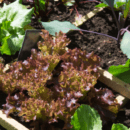
Summer’s sultry days may find you melting in the garden, but heavenly homegrown tomatoes and scrumptious sweet corn makes every drop of sweat and mosquito bite worth it. While you’re indulging in tasty homegrown treats, late summer means it’s time to … [Read more...]
Spotted Lanternfly in Virginia
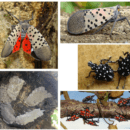
A potentially very serious pest of grapes, peaches, hops, and a variety of other crops, the spotted lanternfly (SLF), Lycorma delicatula, was detected in Frederick County, Virginia, on Jan. 10, 2018. It is important to look for … [Read more...]
Gardening Guided by Phenology
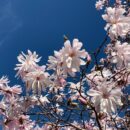
For many centuries, farmers took their signs for planting times from nature. Today, we call this study of cyclic biological occurrences phenology. Here are some examples of phenology used by farmers and horticulturists. Read More: … [Read more...]
From the Help Desk – DEFOLIATED JAPANESE BARBERRY BUSHES
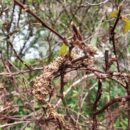
ISSUE: Client has barberry shrubs with webbing and defoliation, with bushes looking terrible. DIAGNOSIS / RECOMMENDATION The problem is the barberry webworm (Omphalocera dentosa). Defoliated branches and webs can be cut out and … [Read more...]
Dahlia Types Explained

Dahlias are becoming increasingly popular in landscapes and make excellent additions to border plantings, flowerpots, and cut-flower gardens. They flower continuously from summer through the first frost and will bloom prolifically if spent … [Read more...]
13 Zucchini Diseases: How to Identify, Prevent, and Treat Them
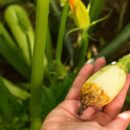
Zucchini is one of the most beginner-friendly garden vegetables around. These fast growing and prolific summer squash can be planted once and yield all summer long. Although they aren’t totally immune to problems, there are many simple organic fixes … [Read more...]
Managing the Japanese Beetle:
A Homeowner’s Handbook
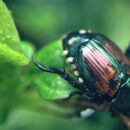
Both as adults and as grubs (the larval stage), Japanese beetles are destructive plant pests. Adults feed on the foliage and fruits of several hundredspecies of fruit trees, ornamental trees, shrubs, vines, and field and vegetable crops. Read More: … [Read more...]
What Virginians Need to Know About the 2022 Spotted Lanternfly Quarantine Expansion
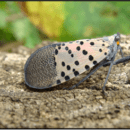
The Virginia Department of Agriculture and Consumer Services (VDACS) Spotted Lanternfly Quarantine will be expanded in July 2022 to include the following cities and counties: Buena Vista, Charlottesville, Harrisonburg, Lexington, Lynchburg, Manassas, … [Read more...]
Viburnum–A Shrub for Many Settings
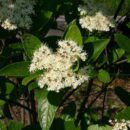
Viburnums are evergreen or deciduous, depending on the species and the location. Most prefer sun, but some do well in partial shade. Their hardiness is well suited to the cold winters of USDA hardiness zone 7. They are adaptable to a range of soil … [Read more...]
Virginia’s Home Garden Vegetable Planting Guide: Recommended Planting Date
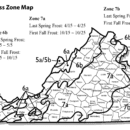
Selecting appropriate planting dates is a critical component of successful vegetable gardening. Vegetables vary widely in their preferred growing conditions and tolerance to temperature extremes, both cold and hot. Understanding the local frost-free … [Read more...]