Red Mulberry Morus Rubra (MOR-us ROO-brah)
Your local birds and small mammals will be delighted if you decide to add Red Mulberry to your
landscape! The blackberry-like fruit will also please the humans in your life. They can be eaten
fresh from the tree or made into pies, cakes or jams but make sure the fruit is ripe. The unripe
fruit and the sap are mildly toxic. You will want to plan the location well too so you aren’t tracking
purple footsteps into your home or on your patio. Native Americans used the plant medicinally as a
worming agent, remedy for dysentery, laxative and emetic. They also made breads, beverages, and
pemmican with the berries.
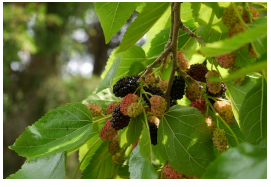
Red mulberry is dioecious but can be monoecious, with
male and female flowers on different branches of the
same plants. Ovate to oblong-ovate, toothed, usually
dark green leaves (to 5” long) have heart-shaped
bases. Leaves can be quite variable, however, ranging
from unlobed to up to 5 deep lobes.
Facts:
Fun Stuff:
- Family: Moraceae
- Zone: 3 to 8
- Height: 25 to 60 feet
- Spread: 35 to 40 feet
- Bloom Time: April – May
- Bloom Description: Greenish white
- Sun: Full sun to full shade
- Bark: Has fibers that can be used for rope
- Attracts: Birds and Pollinators
- Fruit: Delicious, June – August
- Fall Color: Yellow
- Host: Red Admiral Butterfly
- Resistant: Heat, drought, fire
- Native: Red Mulberries are – White are not!
Submitted by Rosemary F., Bedford Extension Master Gardener Volunteer