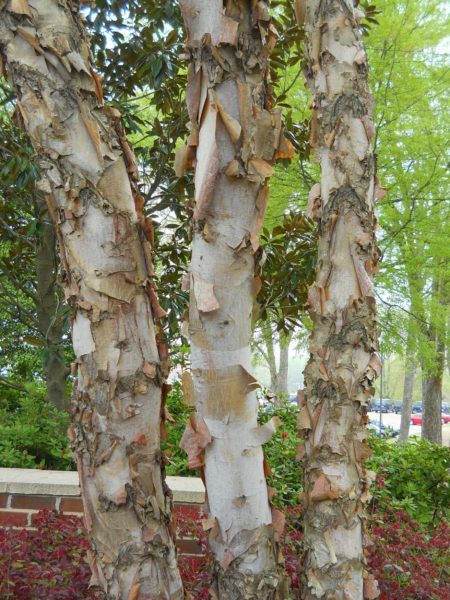
The client has two 5-7 year old river birch trees. For last 2 years, the leaves have not developed to the normal size compared to previous years. Trees are in a sunny, well-drained area. The derecho took off all leaves few years ago. There is no evidence of insects or other damage.
DIAGNOSIS / RECOMMENDATION
River birch are very good landscape trees. However, they do prefer moist (but not wet) soil. They also are particularly sensitive to alkaline pH soils and prefer the soil to be acidic. We recommend you consider taking soil samples in the area around the trees in order to get a better idea about the pH and possibly whether any other fertilization is needed.
ADDITIONAL INFORMATION
Poor growth on the top part of a tree often is an indication of a problem in the soil. It is possible that the soil is just too alkaline for the river birches to grow well. Soils at a pH that is good for lawns may be higher than needed for good growth on river birches (pH needs to be below 6.5) [1, 2]. Too high a pH also can lead to iron deficiency [3, 5].
Birch trees need to have some protection from the hot sun, because of a shallow root system [2, 3]. That also is why moist soil is needed [1, 2]. Planting on the north or east side of a house often offers a better environment than where trees are exposed to hot and dry conditions in the summer. Mulching and proper watering also can help these trees [2]. River birch are resistant to the bronze birch borer, which can be a serious problem on other species of birches [2, 3, 4].
From The Bedford Extension MG Help Desk – May 2019
By: Betsy Brown, Bedford Extension Master Gardener Volunteer; Help Desk Coordinator
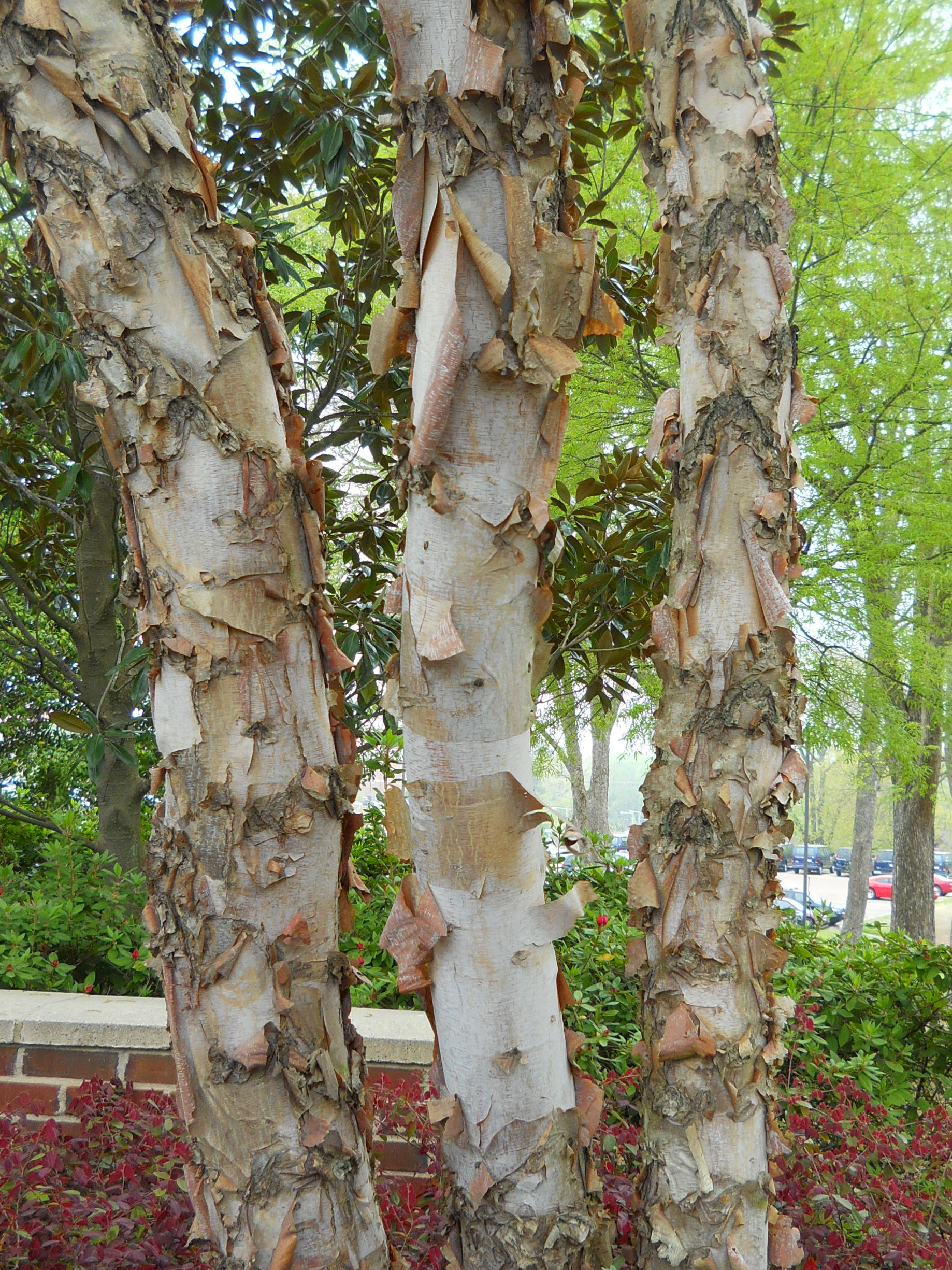
PHOTO SOURCE
https://olemiss.edu/depts/landscape/plants/newplantid/River%20Birch/DSCN1896.JPG
RESOURCE LINKS
All resource links live and accessed, April 12, 2019
1. https://www.pubs.ext.vt.edu/content/dam/pubs_ext_vt_edu/HORT/HORT-23/HORT-23.pdf
2. https://www.fs.usda.gov/naspf/publications/how-grow-and-maintain-healthy-birch-tree
3. http://www.clemson.edu/extension/hgic/plants/landscape/trees/hgic1005.html
4. https://extension.umd.edu/learn/river-birch
5. http://www.uky.edu/hort/River-Birch

–A Bedford Area Master Gardeners Association (BAMGA) Publication–