A monthly exploration of native small trees, focusing on their beauty and benefits.
FRINGE TREE (Chionanthus virginicus)
kee-oh-NAN-thus ver-JIN-ih-kus
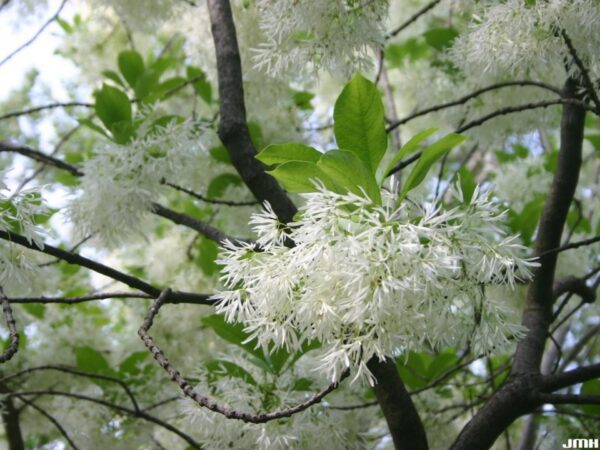
My sister and I saw Fringe trees in full bloom while hiking the AT; so now there is one planted in my yard! Also called granny gray beard, old man’s beard and flowering ash, the bark has been used traditionally to reduce fevers and as a diuretic.
They are dioecious (separate male and female plants), but also may have perfect flowers on each plant. Male flowers are showier than female flowers. Fertilized perfect or female flowers give way to clusters of olive-like fruits which ripen to a dark, bluish black in late summer
The stats:
- Family: Oleaceae (Olive)
- Native Range: Eastern United States
- Zone: 3 to 9
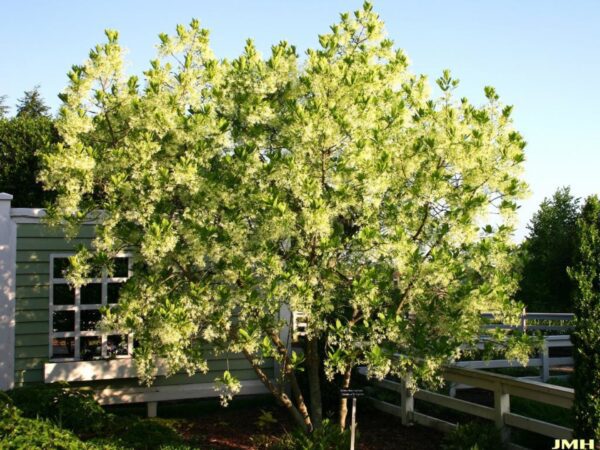
- Height: 12 to 20 feet
- Spread: 12 to 20 feet
- Bloom Time: May to June
- Bloom Description: Creamy white
- Sun: Full sun to part shade
- Water: Medium
- Maintenance: Low
- Tolerates: Clay Soil, Black Walnut, Air Pollution
The fun stuff:
- Showy, fragrant creamy white flowers May through June
- Golden yellow fall foliage
- The berries support up to 75 bird species
- Host plant for two moth species: the Fawn Sphinx moth (Sphinx kamiae) and the Rustic Sphinx moth (Manduca rustica).
- Bees and other pollinators love the blooms.
RESOURCES:
- https://www.missouribotanicalgarden.org
- https://vnps.org/1997-fringe-tree-chionanthus-virginicus
- https://piedmontmastergardeners.org
- South Carolina Wildlife Federation https://scwf.org
Submitted by Rosemary F., Certified Bedford Master Gardener