American Beech – Fagus grandifolia
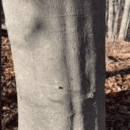
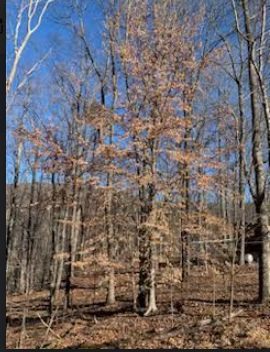
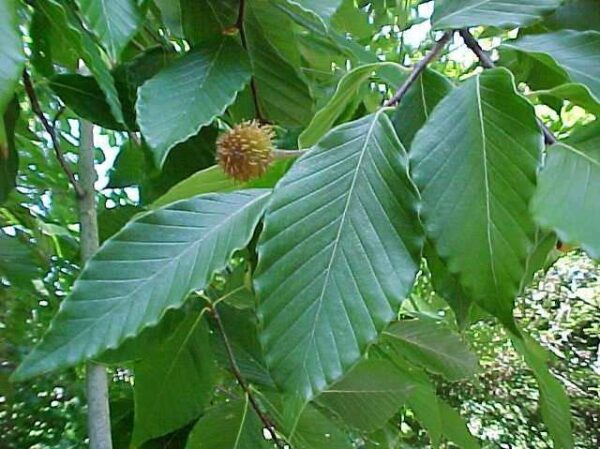
The American Beech’s symmetrical, stately bearing makes it a great native choice for a landscape that needs shade and beauty. It also features a muscular trunk with smooth gray bark said by some to look like elephant skin (Personally I think it more resembles dolphin skin!). A beech tree flowers in April, when its pollen is a source of nutrition for local pollinators. The American beech is monoecious, meaning it has both male and female flowers on individual trees and those flowers become beechnuts which can be eaten by humans. But good luck getting to them – they are in high demand by all sorts of wildlife as they are high in protein and fat. The trees, especially younger specimens, are “marcescence” (pronounced “mar-CESS-ensis”). In the winter you can see their ghostly shapes as they hold on to many of their rose-gold leaves until the spring leaf buds appear.
Facts
- Family: Fagaceae
- Native Range: Eastern North America
- Zone: 3 to 9
- Height: 50.00 to 80.00 feet
- Spread: 40.00 to 80.00 feet
- Bloom Time: April to May
- Bloom Description: Yellowish-green
- Sun: Full sun to part shade
- Water: Medium
- Maintenance: Low
- Suggested Use: Shade Tree
- Flower: Insignificant
- Leaf: Good Fall color -gold
- Fruit: Showy, Edible
- Tolerate: Deer, Black Walnut
Resources:
www.missouribotanicalgarden.org/; https://lee.ces.ncsu.edu/2023/06/beeches-indicator-trees-of-biodiversity/?src=rss; mainegardens.org; nativeplanttrust.org; Appalachian Mushrooms by Walter E. Sturgeon
Fun Stuff
- Can live 200 yrs
- Hosts 126 caterpillar species, including the early hairstreak, a rare species in need of conservation
- A nest site for Cooper’s Hawks and American Redstarts and cavity-dwelling birds like black-capped chickadees, tufted titmice and wood ducks
- Important food source for White-throated sparrows, Blue Jays, Red-headed Woodpeckers, White-breasted Nuthatches, and Red-bellied Woodpeckers. Also squirrels, ducks, wild turkeys, raccoons, bear and deer.
- Myccorhzial relationships with many edible mushrooms such as Black Trumpets, Cinnabar Chanterelles and several Boletes
- Daniel Boone marked his progress westward by inscriptions on the smooth bark of the trees.
Submitted by Rosemary F., Bedford Extension Master Gardener.