Witch Hazel Hamamelis virginiana (ham-ah-MAY-lis ver-jin-ee-AY-nah)
Witch hazel is a deciduous shrub or small tree that may grow 15 to 20 feet tall. This easily overlooked native becomes noticeable when after its leaves turn an attractive yellow color in the fall they drop and cheery yellow spider-like blooms brighten drab winter woodlands. Also notable is the fruit which takes a year to mature, turning from green to brown and becoming woody. The half-inch capsule splits open at the top explosively ejecting the black shiny seeds up to 30 ft. away. This creates audible “snap, crackle, and pop” sounds that can startle anyone who is walking nearby.
Indigenous peoples used witch-hazel for teas and liniments and it continues to be used medicinally to this day. The “witch” portion of the name is a tribute to the use of the flexible branches as divining rods to “witch” for water. Flowers are pollinated by noctuid moths, wild turkeys eat the seeds, deer may browse leaves and the fruit is eaten by small mammals and birds.
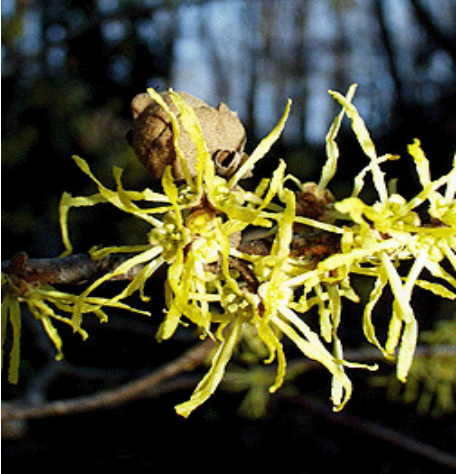
- Native Range: Eastern North America
- Zone: 3 to 8
- Height: 15 to 20 feet
- Spread: 15.00 to 20.00 feet
- Bloom Time: October to December
- Bloom Description: Yellow sometimes tinged with orange or red
- Sun: Full sun to part shade
- Water: Medium
- Maintenance: Low
- Suggested Use: Hedge, Naturalize, Rain Garden
- Flower: Showy, Fragrant
- Leaf: Good Fall
- Attracts: Birds
- Other: Winter Interest
- Tolerate: Deer, Erosion, Clay Soil
- Host: Witch hazel dagger moth (Acronicta hamamelis) larva
https://dendro.cnre.vt.edu/dendrology/syllabus/factsheet.cfm?ID=50; https://www.missouribotanicalgarden.org/PlantFinder/PlantFinderDetails.aspx?taxonid=281023; https://plants.ces.ncsu.edu/plants/hamamelis-virginiana/; https://vnps.org/2002-witch-hazel-hamamelis-virginiana/;
Written by Rosemary F., Bedford Extension Master Gardener